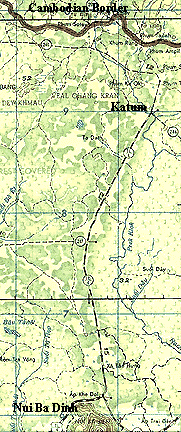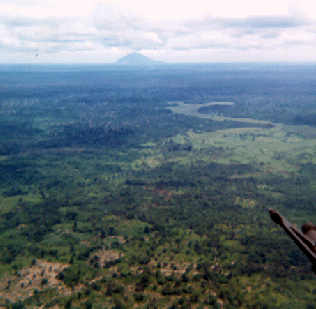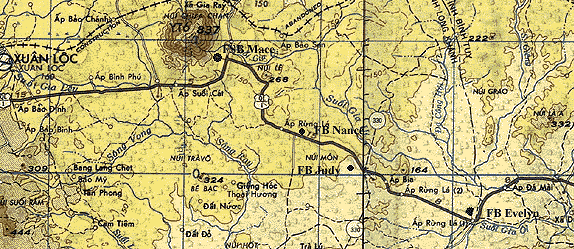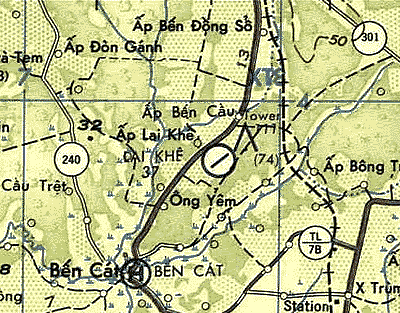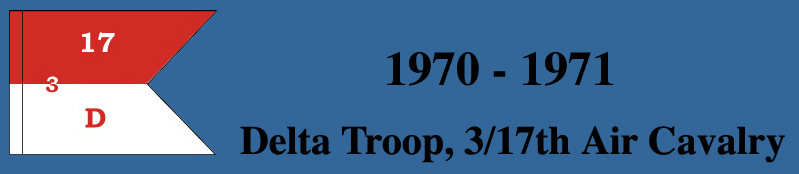
By Way of IntroductionI went to Vietnam in November 1970 and was there through September 1971. It was late in the Vietnam War. American withdrawal was underway in earnest. In Delta Troop's area of operation (from the Cambodian border north of Tay Ninh to the South China Sea in III Corps), American combat divisions that had been in the area since 1966 departed in toto or left behind brigades where divisions had once operated. The 1st Infantry Division departed Vietnam in April 1970. The 199th Light Infantry Brigade left in October 1970. The 25th Infantry Division was reduced to just the 2nd Brigade in December 1970, and the 2nd Brigade itself withdrew in April 1971. The 1st Air Cavalry Division was reduced to just the 3rd Brigade in April 1971. As withdrawal proceeded, military action became increasingly defensive in nature. Delta Troop as Recon for the Rear GuardXuan Loc
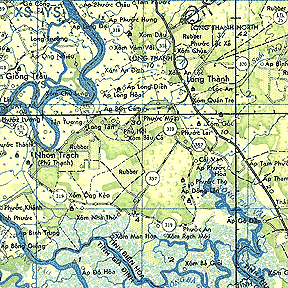
Nhon Trach
Tay Ninh
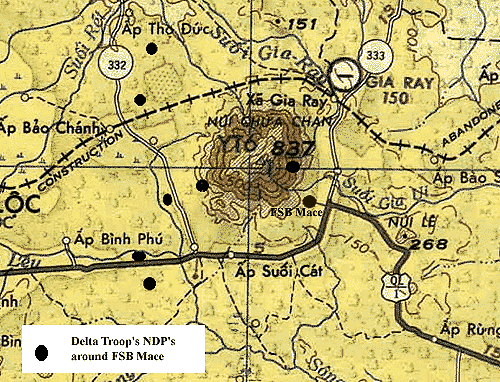
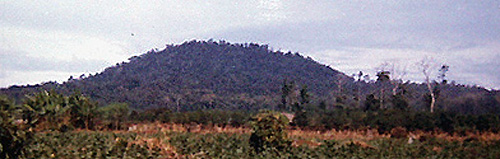
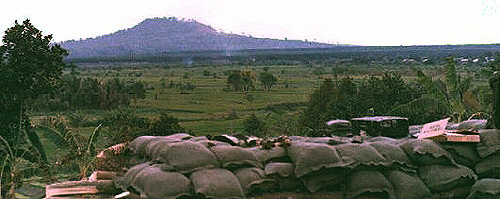
FSB Mace
Lai Khe
A Good Troop in a Bad TimeDelta Troop went to Vietnam in October 1967 and left in April 1972. Over that long era of war, the troop faced many challenges, on the battlefield and off. By 1971, many of the challenges came from off the battlefield. As American units withdrew from the battlefield and America turned against the war and its warriors, Delta Troop's challenge was to remain an effective combat unit. With "Vietnamization" or withdrawal or whatever term one chooses to use for what really happened, attitudes in the war zone changed substantially from those of the 1960's. No one seriously entertained the belief that the United States government intended to win the war. Soldiers now speculated on exactly who would be the last to die in Vietnam, and those going back to The World requested that the last G.I. to leave Vietnam turn out the lights. Social turmoil at home, purposelessness in Vietnam, and a volatile mix of draftees, drugs and demoralization threatened the Army's control of its troops. All too often, field soldiers in the early '70's were willing to openly challenge authority because the Army could produce no disciplinary threat that was worse than service in the field as a grunt. The NCO cadre bent under the strain of the protracted war. The war had decimated the junior NCO ranks, and many of the junior NCO's were now products of the Non-Commissioned Officer Candidate School. As a result, many junior NCO's had only three months more time in the Army than the PFC's they led. The senior NCO's saw their chosen career and way of life demeaned and degraded by an American public that turned against its warriors even as it turned against the war. 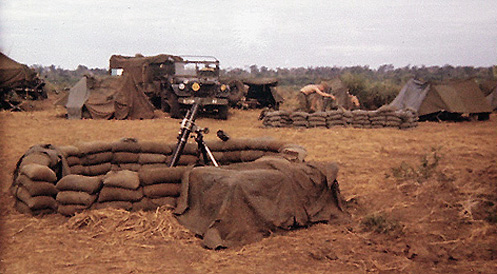 Delta Troop's response to these stresses was realistic. While the troop was not immune to the military and social chaos swirling around it, it did not succumb to it. The troop preferred duty in the field, where a subtle truce among the bi-polar elements of officers vs. men, black vs. white, heads vs. juicers allowed the troop to function effectively as combat unit. When placed in harm's way, Delta Troop fought with courage and vigor. However, the bleak outlook crushed the esprit de corps that was Delta Troop's by right. Troop awards, honors, and distinctions remained in symbol, but the reasons for their being were forgotten. When I was ordered to wear a distinctive red beret as headgear and add a Presidential Unit Citation and Meritorious Unit Citation to the right pocket of my dress uniform, I asked why? No one knew, exactly. I did not pursue the reasons for the honors and distinctions of Delta Troop, either in-country or after I returned to The World. Indeed, the first thing I did when I got home was to burn the letters my wife had saved, along with all the orders and other material the Army gave me as parting gifts. I thought doing so would make Vietnam go away. All it did was make it that much more difficult to reflect, to reconsider, to remember Vietnam.  Bluetiger Home PageThe graphics and intellectual property at this site are the private property of the donors exclusively, and are protected by copyright law. Any commercial or for-profit use without permission is illegal and is expressly denied. Not-for-profit, educational, and similar organizations may be granted use of material contained herein upon application to Bill Nevius. |